The History and Practices of Divination Across Cultures
Divination, derived from the Latin term “divinare,” meaning to foresee or prophesy, is the endeavor to gain insight into questions or situations through occult rituals or practices. Historically, diviners have utilized various methods to interpret signs, events, or omens, or claimed interactions with supernatural entities such as spirits, gods, or the will of the universe.
Divination and numerology, two ancient practices deeply rooted in human culture, share a common goal: to uncover hidden truths and provide insights into the human experience. While numerology focuses specifically on the mystical significance of numbers, divination encompasses a broader range of methods for accessing esoteric knowledge. This exploration delves into the intricate connections between these two metaphysical practices, highlighting their shared foundations and complementary nature.
Shared Foundations
At the heart of both divination and numerology lies the art of symbolic interpretation. This shared foundation forms a bridge between the tangible and the intangible, the known and the unknown.
- Numerology: In this practice, numbers are not merely quantitative values but carry profound symbolic meanings. Each number is believed to resonate with specific energies, revealing insights about personality traits, life paths, and potential futures. For example:
- Number 1 often symbolizes new beginnings and leadership
- Number 7 is frequently associated with spiritual awakening and introspection
- Divination: Similarly, various divinatory methods rely on interpreting symbols to gain insight. Examples include:
- Tarot: Each card in the deck represents archetypal energies and life situations
- I Ching: Hexagrams composed of broken and unbroken lines symbolize cosmic principles
- Astrology: Celestial bodies and their positions symbolize different aspects of human experience
Ancient Origins and Cultural Significance
Both numerology and divination boast ancient origins, with their practices woven into the fabric of numerous cultures throughout history.
- Historical Context
- Mesopotamian civilizations: Practiced both numerology and astrology as early as 3000 BCE
- Ancient Egypt: Utilized numerology in conjunction with divination methods in religious and state matters
- Pythagoras (6th century BCE): Developed a system of numerology that influenced Western mystical traditions
- Cultural Integration
- Chinese culture: The I Ching, a divinatory text, incorporates numerical elements in its hexagrams
- Kabbalah: Jewish mysticism intertwines numerological concepts (gematria) with spiritual teachings
- Vedic traditions: Jyotish (Indian astrology) incorporates numerological principles in its calculations
Complementary Practices
Numerical Systems in Divination
Many forms of divination incorporate numerical elements, creating a natural synergy with numerology.
- Tarot
- The 78 cards are divided into 22 Major Arcana and 56 Minor Arcana
- Each card is associated with a number, adding depth to interpretations
- The numerological significance of these numbers enhances the overall reading
- Astrology
- Houses in a natal chart are numbered 1 through 12, each with specific meanings
- Planetary aspects are based on geometric angles, often expressed as ratios (e.g., trine = 120° = 1/3 of the zodiac)
- Geomancy
- This divinatory practice generates figures based on random number generation
- The resulting patterns are interpreted for insight, often in conjunction with numerological principles
Cyclic Nature of Time and Events
Both numerology and divination recognize cyclical patterns in life and the universe, offering frameworks for understanding these rhythms.
- Numerology Cycles:
- Personal Year Numbers: Calculated based on birth date and current year, indicating the energy of a given year
- Life Path Cycles: Dividing life into three or four major cycles based on one’s Life Path Number
- Divinatory Cycles:
- Astrological cycles: Planetary returns (e.g., Saturn Return) and progressed charts
- I Ching: 64 hexagrams representing a complete cycle of change and return
Personal Insight and Guidance
Both practices aim to provide individuals with guidance, self-understanding, and a sense of connection to larger cosmic patterns.
- Numerology:
- Core Numbers (Life Path, Expression, Soul Urge) offer insight into one’s fundamental nature and purpose
- Name numerology provides guidance on potential name changes for beneficial energetic shifts
- Divination:
- Tarot spreads can be designed to address specific life questions or general life path inquiries
- Astrology birth charts offer a comprehensive view of one’s potentials, challenges, and life themes
Modern Integration and Applications
In contemporary practice, numerology and divination are often used in conjunction, creating a more comprehensive approach to metaphysical insight.
- Many practitioners combine numerology with other divinatory tools for a multi-faceted interpretation
- Both are used in coaching and self-help contexts to guide personal and spiritual growth
- Some individuals consult both numerological calculations and divinatory readings when facing important life decisions
- Numerology’s personal year and month calculations are often combined with astrological transits to determine auspicious timing for events or actions
Divination attempts to bring order to what seems random to provide insight into issues at hand. Methods include Tarot reading, rune casting, tea-leaf reading, automatic writing, water scrying, and the use of psychedelics like psilocybin mushrooms and DMT. If a distinction is made between divination and fortune-telling, divination is often more formal, ritualistic, and socially oriented, usually within a religious context. Conversely, fortune-telling is more personal and everyday. Specific methods of divination vary by culture and religion.
In its functional relationship to magic, divination often plays a preliminary and investigative role. The diagnosis or prognosis achieved through divination is both temporally and logically related to the manipulative, protective, or alleviative function of magic rituals. Divination identifies the cause of an ailment or a potential danger, while magic acts upon this knowledge.
Throughout history, divination has faced criticism. In modern times, the scientific community and skeptics dismiss it as superstitious, with experiments failing to show that divination techniques can predict the future more reliably than chance. In ancient times, philosophers like Cicero and Sextus Empiricus criticized divination, and satirists like Lucian targeted fraudulent prophets.
History
The Oracle of Amun at the Siwa Oasis gained fame when Alexander the Great visited it after conquering Egypt in 332 BC. Biblical texts such as Deuteronomy and Leviticus can be interpreted as forbidding divination, though practices like Urim and Thummim, casting lots, and prayer are considered divination by some. Early Christian artifacts like the Sortes Sanctorum, a book using dice to predict the future, suggest Christian roots in divination.
Uri Gabbay notes that divination in the ancient Near East, including Mesopotamia and Israel, was associated with sacrificial rituals. Extispicy, where diviners examined the organs of sacrificial animals for divine messages, was common.
Oracles and Greek Divination
In ancient Greece, both oracles and seers practiced divination. Oracles were conduits for the gods, delivering prophecies as the gods’ will. Due to the high demand and limited availability of oracles, seers, who interpreted signs from the gods, were more numerous and accessible. Seers used methods like extispicy and ornithomancy to provide answers, often requiring multiple sacrifices for consistency.
During battles, generals consulted seers for omens both at the campground and the battlefield. Seers’ power over influential individuals led to skepticism about their honesty, yet the craft remained respected and trusted by the Greeks.
Middle Ages and Early Modern Period
Divination practices continued through the Middle Ages. The Quinisext Council of 692 sought to eliminate pagan and divination practices in the Eastern Orthodox Church. Despite this, fortune-telling and divination persisted, with laws against such practices leading to severe punishments.
In Islam, astrology and other divinatory sciences were widespread, with astrologers interpreting celestial entities for practical purposes. Geomancy, or the “science of the sand,” relied on interpreting figures traced on surfaces, while dream interpretation and the “science of letters” held significant weight in Islamic divination.
Mesoamerica
Divination was central to Mesoamerican religious life, with gods like Tezcatlipoca associated with sorcery and divination. The Aztec Codex Borbonicus depicts the original human couple engaged in divination with maize kernels. Hallucinogens were also used for divination, with plants like morning glory, jimson weed, and peyote being common.
Contemporary Divination in Asia
In India and Nepal, practices like Theyyam involve inviting deities to possess individuals to answer questions. In Japan, contemporary divination includes methods like Western and Chinese astrology, tarot cards, and physiognomy. Japanese tarot cards, often featuring cultural symbols or popular characters, function similarly to their Western counterparts.
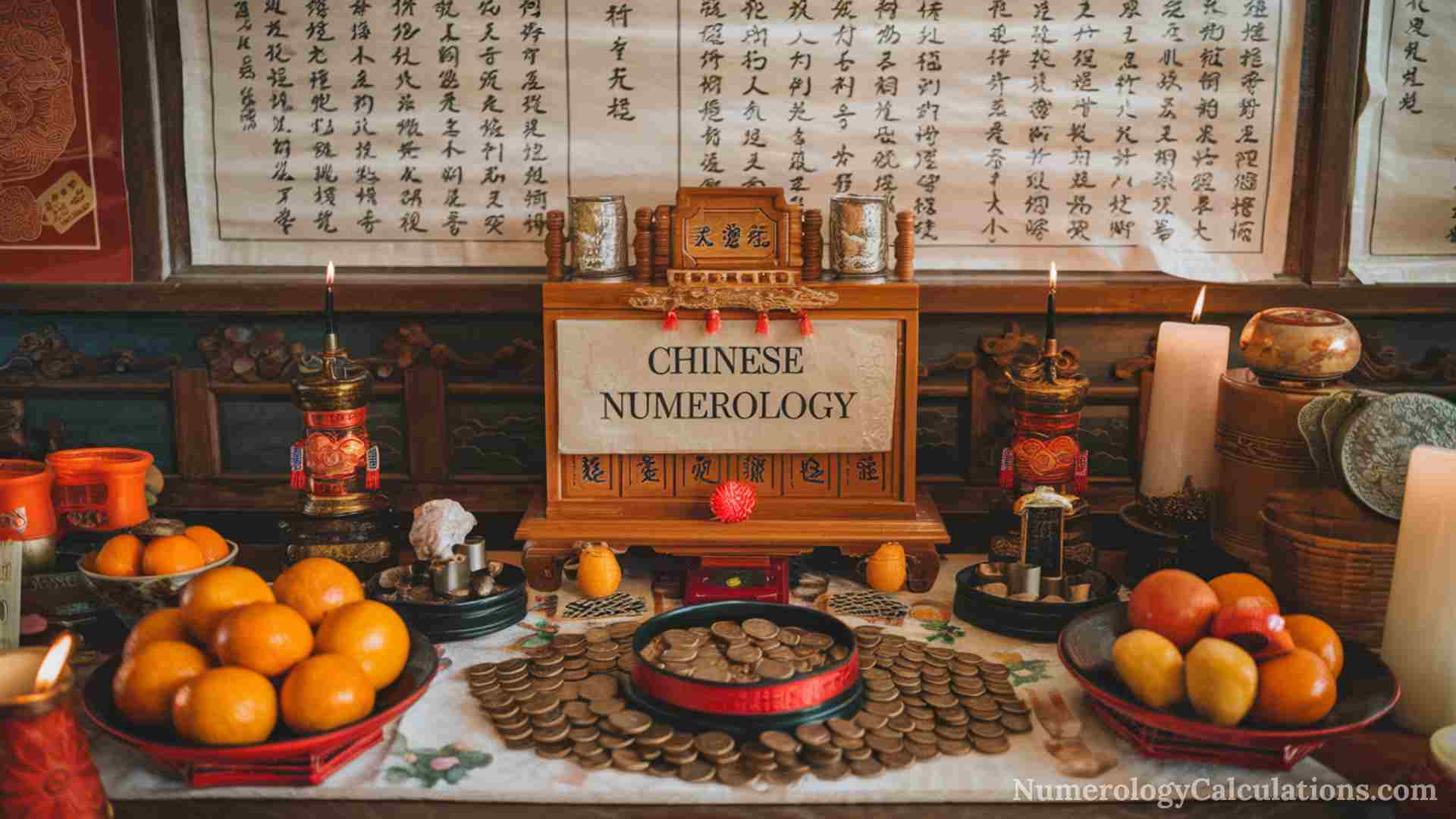
In Taiwan, divination practices like the Poe and Kiō-á involve interpreting the positions of dropped blocks or characters traced by possessed chairs.
Contemporary Divination in Africa
Divination remains widespread in Africa, with practices like those of the Serer high priests in Senegal being central to religious and medicinal roles. Only initiated individuals can perform divination, highlighting its significance in African cultures.
While divination and numerology are distinct practices, their shared foundations in symbolic interpretation, ancient wisdom, and the quest for hidden knowledge create a rich tapestry of complementary insights. By understanding the connections between these practices, practitioners and seekers can gain a more nuanced and comprehensive view of the metaphysical landscape.
As with all esoteric practices, it’s important to approach numerology and divination with an open yet discerning mind, recognizing their cultural and spiritual significance while also acknowledging the lack of scientific validation for their claims. Whether viewed as literal tools for prediction or symbolic systems for self-reflection, these ancient practices continue to offer many individuals a sense of guidance, meaning, and connection to the mysteries of existence.